Home / The Mahatma

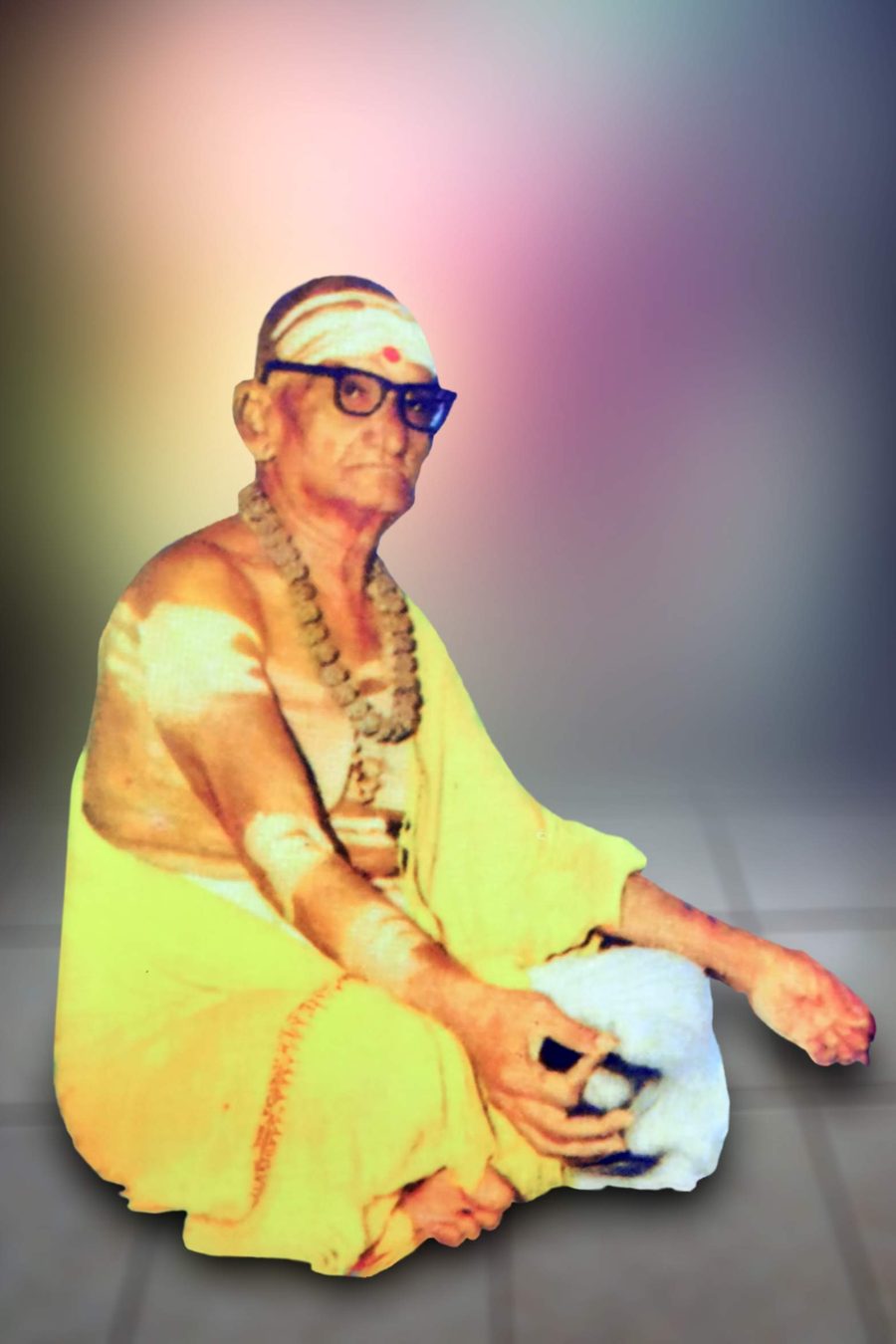
Mahatma Sri
Kamakshi Dasar

Brahma Jnani · Exponent of Satya Advaita · Voice of the Divine Mother
  • Born27 December 1900, Sivaganga, Tamil Nadu
  • Birth nameR. Somasundaram Iyer, Advocate
  • OrdainedBy Goddess Kamakshi, in a divine vision at twenty-six
  • Merged with the Divine4 March 1988, Chennai, Tamil Nadu
Mahatma Sri Kamakshi Dasar
Early life

Early years

The divine descent of Sri Somasundaram took place on Sashti thithi, Purattadhi star of Margazhi 13 in the Sarvari year — 27 December 1900 — in Sivaganga District, Tamil Nadu. His mother, Sri Subbulakshmi Ammal, had divine dreams before his birth, which led to his name being chosen: Somasundaram if a son, Meenakshi if a daughter.

He was the third child of Sri Ramaswamy Iyer and Sri Subbulakshmi Ammal, and was devout from a very young age. In 1917 he moved to Chennai to study for a BA in Mathematics at Pachaiyappa’s College, and later to Tiruvananthapuram to study Law. In 1921 he married Sri Champakalakshmi Ammal.

Life-altering experiences at Tiruvananthapuram

His life took a profound turn in Tiruvananthapuram, where he began to have a number of divine visions and experiences. Following this, he became an ardent devotee of Lord Subramanya. After graduating in Law he returned to Chennai, and in 1924 began practising at the Madras High Court.
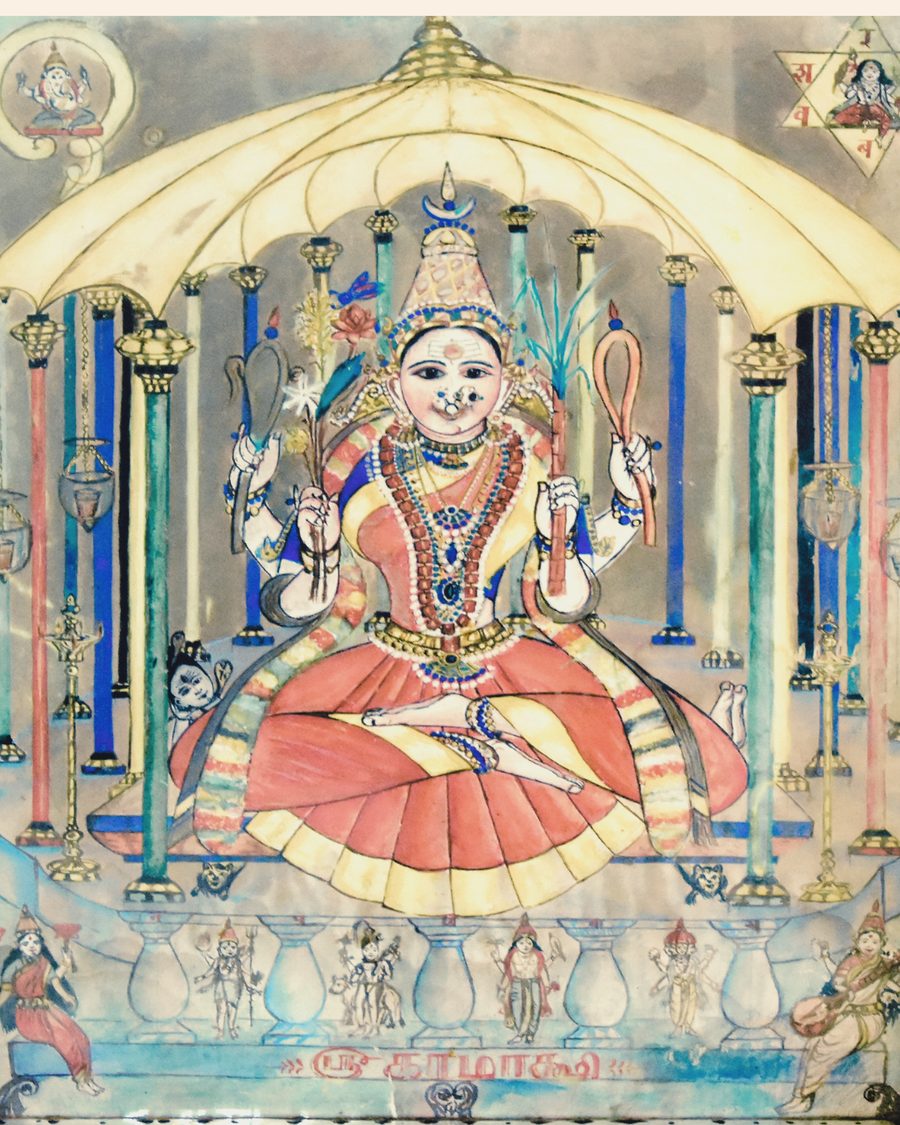
Sri Kamakshi, watercolour
Sri Kamakshi — the Goddess in watercolour
The divine calling

The vision of the Divine Mother

At twenty-six, at the height of a fabled career as a lawyer at the Madras High Court, he had the divine vision of Sri Kamakshi Devi, who ordained him to sing songs in her praise. The songs spontaneously overflowed out of him from then on.

He painted the Goddess in watercolour exactly as seen in his vision, and began worshipping her. That painting, done in mere watercolour, is still in worship, as fresh as ever. Kamapeetathilor was the first song he sang, describing his divine vision.

Many of the songs he sang on Goddess Kamakshi resembled the Thiruppugazh form, and he called them Sri Kamakshi Thiruppugazh.

Divine experiences

Experiences with the Divine Mother

His divine compositions were either an extension of his divine experiences or praises that overflowed when he was immersed in intense devotion to the Divine Mother.

The Cauvery, Trichy

Sri Dasar went with his devotees to Trichy for a Satsang, and indicated beforehand that an unusual event was in store for them. They went to the Cauvery for their morning ritual ablutions. An ardent devotee, Athimoola Mudaliyar, was drowned in the river and Sri Dasar jumped in to rescue him. Though he could swim, the two struggled; the river’s weeds and currents threatened to drag both of them under.

He prayed fervently to the Divine Mother. In response he had a divine vision of Sri Kamakshi lifting both of them out of the treacherous swamp, preventing them from drowning.

Those who witnessed the rescue exclaimed that no one had ever escaped certain death in those waters, and it left a profound impression on all present. In gratitude, he composed and sang Akhilandeshwari Ashtakam and Ambal Ashtakamalai that very night, celebrating the Divine Mother’s grace and protection.

His devotees

A refuge to his devotees

His Pournami Pooja was attended by great gatherings of devotees, and he blessed everyone with the kumkum prasad offered to the Divine Mother. That kumkum prasad is known to have cured malicious diseases and mental disorders, and bestowed many good fortunes on his devotees.

The divya mangala vigraha

Sri Dasar had a divine vision in which he perceived the ill health of one of his devotees. Concerned, he summoned the devotee’s wife to ask after her husband’s condition. On learning of the ailment, he decided to offer a Thirumangalyam to Sri Kamakshi Devi to combat the devotee’s illness.

He was considering how best to make the offering — particularly to a large painting of the Goddess in his worship space — when an unexpected visitor arrived, asking for him. The visitor had brought a divya mangala vigraha of Sri Kamakshi Devi that he had custom-made for his own worship. He explained that in a divine dream the Goddess had ordained him to entrust the idol to Sri Dasar for worship.

Sri Dasar was overjoyed: it was a divine confirmation of their spiritual connection, and of his role in serving the Divine Mother. It was one of many such occurrences that he documented in his daily journals.

His teaching

A life of song and instruction

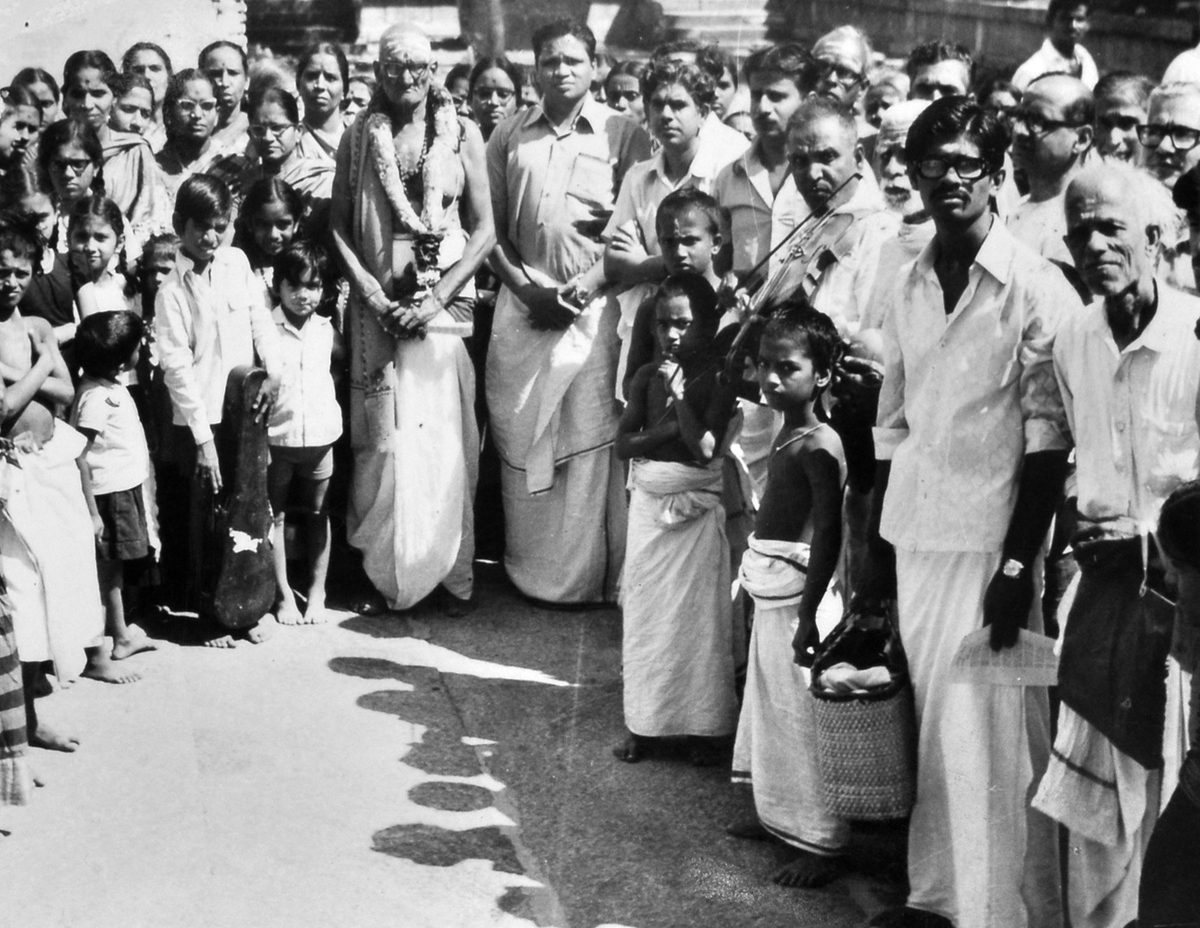
He rendered bhajans and divine lectures across India, including at the Y.M.C.A, the Y.M.I.A and the Theosophical Society, and gave Saiva Sidhantha lectures at Vivekananda College in Chennai for six years.

He insisted that everyone must lead a life of morality, chant the divine names and sing the glory of the Divine.

Explore his divine works →   Understand Satya Advaita →

The final days

Merging with the Divine

In his later months he was ill and bedridden. Witnesses observed his astral body leaving to worship the Divine Mother and returning.

On 3 March he indicated that he would leave his body the following day and merge with the spear of Lord Subrahmanya.

On 4 March 1988, in Chennai, Tamil Nadu, he merged with the Divine.

Continue

From his life to his work and teaching